More box turtles die during hibernation than at any other point in the year. Most of those deaths are preventable. They happen because the keeper either skipped the pre‑hibernation health check, let the turtle get too cold, let it get too warm, kept it too dry, kept it too wet, kept it too short, kept it too long — or, most often, didn’t really know which of those they were doing. This is the long version of how we hibernate our own animals, what the safety rails are, and the situations where the right call is to skip the cycle entirely.
By Maya, with veterinary pre‑hibernation criteria contributed by Ben.
Table of Contents
Brumation, not hibernation (but everyone says hibernation)
Technically, what reptiles do isn’t hibernation — it’s brumation. Mammals hibernate. Reptiles brumate. The mechanism is different: mammals burn metabolic fuel through a controlled metabolic depression; reptiles go genuinely cold and their entire metabolism slows in proportion. The practical difference for a keeper: a brumating turtle is much closer to “off” than a hibernating mammal. It is also much closer to “dead”, and the line is thin.
We use “hibernation” through the rest of this article because that is the term every keeper uses. Pedantry aside, the rules are the same.
Which species hibernate, which don’t
Hibernate naturally and benefit from it
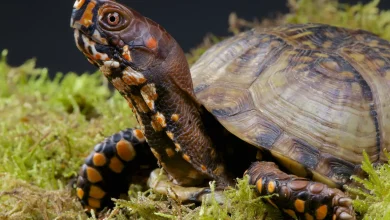
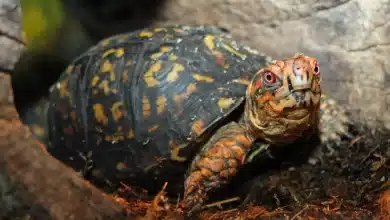
- Eastern box turtle (Terrapene carolina carolina)
- Three‑Toed / Mexican (Terrapene mexicana mexicana and its subspecies in the northern part of their range)
- Gulf Coast (T. c. major) — light cycling only
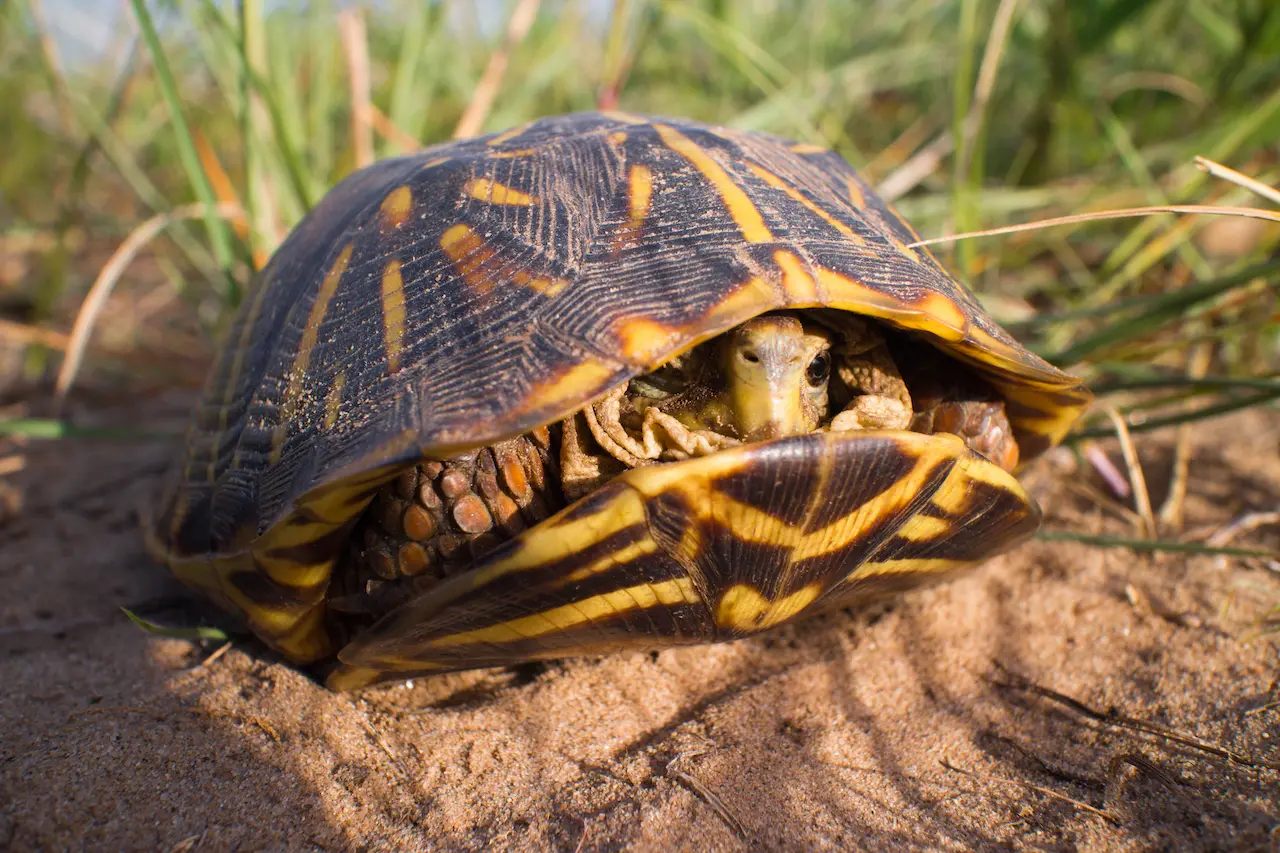
- Ornate (T. ornata) — including the former luteola; they brumate hard in grassland winters
Skip the cycle
- Florida box turtle (T. c. bauri) — does not brumate in the wild in most of its range; do not force a cycle indoors.
- All hatchlings under 12 months, every species. First‑year mortality through hibernation is catastrophic. Keep them warm and feeding through winter one.
- Sick, underweight, or recovering animals, every species, every age.
- Most Asian Cuora species — read species‑specific care; many do not brumate at all, and the ones that do have very different protocols.
The pre‑hibernation health check (Ben’s list)
Done four to six weeks before you intend to cool the animal down. Every box on this list must be ticked. If any are unticked, you do not hibernate this animal this year.
- Body condition. Adequate fat reserves visible in the inguinal pockets (the soft tissue between the limbs and the shell). Not skinny, not obese.
- Weight trend. Stable or gently up over the last 6–8 weeks. Not losing weight.
- No active illness. No URTI, no shell rot, no eye involvement, no aural swelling, no parasites (faecal float clean within the last 3 months).
- Mouth and eyes clear. Symmetric, no discharge.
- Active and feeding well heading into autumn.
- At least 2 years old. Hatchlings and yearlings do not hibernate.
- Pre‑hibernation vet exam if any concern. This is not optional for an older animal or one with a known condition.
If you are reading this list and any item gives you a “yes but” — skip the cycle. A warm winter is much safer than a marginal hibernation.
The pre‑hibernation fast
Box turtles must enter hibernation with an empty gut. Food left in the digestive tract during cold months ferments, fails to be digested, and causes severe gastrointestinal upset — sometimes fatal. The fasting protocol:
- 4 weeks before cooling: normal feeding, no changes.
- 3 weeks before: reduce feeding to every other day.
- 2 weeks before: stop solid food. Continue water access, daily warm soaks (20 minutes) to encourage defecation.
- 1 week before: maintain water access and warmth, daily soaks. Continue normal photoperiod and warm basking.
- The week before cooling: two cooler nights to begin signalling the change; daily soaks until the turtle has produced at least two clean stools.
Verify the gut is empty by observing clean clear soak water after the last 2–3 soaks — no faecal output remaining.
The cool‑down
The transition from active warmth to hibernation temperature should take 2–3 weeks. Drop the ambient by 2–3°C per week. The body must have time to adjust its enzyme activity and reduce metabolism gradually. A sudden cold drop is dangerous.
Lighting: reduce photoperiod by 30–60 minutes per week, mirroring autumn day length. By the end of cool‑down, lights are off entirely.
Hibernation temperature
The target hibernation temperature for North American Terrapene is 4–7°C (40–45°F). Stable. Constant. Not “cool”. Not “cold”. Not “freezing”.
- Below 4°C: risk of frost injury, eye damage, organ damage.
- Above 7°C consistently: the metabolism remains slightly active. The turtle burns fat reserves without genuinely entering brumation. This is the most common cause of “didn’t survive hibernation” — a half‑warm garage where the turtle slowly starves.
- Fluctuating temperature: the turtle keeps trying to wake up. Each near‑wake costs energy. Repeated near‑wakes drain reserves fast.
This is why we hibernate indoors in a temperature‑controlled wine cooler or dedicated mini fridge. A digital thermometer, a logger, and a sanity check every day or two. It is the cheapest insurance available.
How we actually do it
Our setup, refined over a decade and built off Tess Cook’s protocol in Box Turtles and Klingenberg’s notes in The Box Turtle Manual:
- Hibernaculum: a sturdy plastic tub, 40 cm deep, with ventilation holes drilled high in the sides. Filled with a 15‑cm layer of barely damp sphagnum moss, then loose oak leaves and shredded paper.
- Temperature control: a small wine fridge set to 5°C, in a basement room with stable ambient. Digital thermometer with min/max logging inside the hibernaculum, not just in the fridge.
- Humidity: a small water dish, deep enough for a drink but not for soaking. Substrate moisture checked weekly — barely damp, not wet.
- Duration: typically 10–14 weeks for healthy adults. Never less than 8, never more than 16.
- Check‑ins: weekly visual check. Quick. Don’t handle. Don’t disturb. Just look — is the turtle in the same orientation? Any visible distress?
Signs hibernation is going wrong
Wake the turtle immediately if you see any of these. A botched hibernation is recoverable; a too‑late intervention is not.
- Eyes sunken or weeping
- Soft cheek areas (dehydration)
- Significant weight loss between weekly checks
- Open mouth
- Pale gums or visible skin discolouration
- Repeated movement / restlessness (the turtle keeps trying to climb out)
- Foul smell from the hibernaculum (faecal release in cold = something seriously wrong)
Wake‑up
The reverse of cool‑down, in roughly the same timeline:
- Move the hibernaculum to a cool room temperature (10–15°C) for 24 hours.
- Move to a warmer indoor enclosure (18–22°C) with no basking lamp yet.
- Day 2 — short warm soak (20 minutes at room temperature water).
- Day 3 — basking lamp on for a short photoperiod (6 hours).
- Day 4–5 — full photoperiod and basking, UVB back on.
- Day 5–7 — first food offered. Light. Live invertebrates. Don’t expect the turtle to eat for the first day or two.
- Daily soaks for the first 2 weeks.
- Vet check within 2 weeks of wake‑up. Always. Even if the turtle looks fine.
Outdoor hibernation
For keepers in climates where outdoor hibernation is genuinely safe (the established range of the species, dependable winter, no urban predator pressure), an outdoor hibernaculum can work. Build it deep — at least 60 cm below grade — with a thick mulched cap and predator‑proof sides. Drainage matters as much as insulation. A waterlogged hibernaculum is fatal.
We do not outdoor‑hibernate any of our animals. The control is too poor and the failure modes are too many. Even keepers who do outdoor‑hibernate routinely move animals to indoor controlled brumation in years where the turtle has had a marginal season or where weather forecasts suggest extremes.
Skipping the cycle
If you can’t hibernate safely, don’t. The myth that box turtles “must” hibernate every year is just that — a myth. Captive box turtles in heated indoor enclosures, fed and lit normally year‑round, live full lives. They may not breed, and their long‑term physiology has more thermal stability than they would experience in the wild, but there is no evidence that this shortens their lives if husbandry is otherwise excellent.
Reasons to skip in a given year:
- Animal underweight or recovering
- Any illness in the last 3 months
- Keeper does not have temperature‑stable hibernation setup
- Keeper is travelling and cannot check the animal weekly
- This is the animal’s first winter
- You are unsure. Always default to safety.
The numbers
In our records: out of 47 hibernation cycles run on our own animals since 2015, we have had two failures — one a turtle that didn’t gain enough autumn weight (caught at week 3 of hibernation, woken, recovered), and one a hibernaculum that crept to 9°C unnoticed (turtle metabolised reserves, lost 15% body weight, recovered fully after wake‑up and a 6‑week feeding program). Zero deaths, but two near‑misses that could have gone either way. The lesson we took from both: the thermometer matters more than the protocol.
Further reading on Box Turtles
- Box Turtle Care — the umbrella husbandry guide
- Box Turtle Enclosure Setup
- Box Turtle Diet
- Box Turtle Health Problems & Vet Care
- Tess Cook’s Box Turtles review — the book whose hibernation chapter informs ours
External references
- ARAV — find a reptile vet for a pre‑hibernation exam
- US Fish & Wildlife species range maps — for confirming whether outdoor hibernation is climatically appropriate for your area
If you are about to start cool‑down on an animal and want a sanity check, Maya is the right person to email — write in via the contact page.